The challenge: Taking your family business to go.
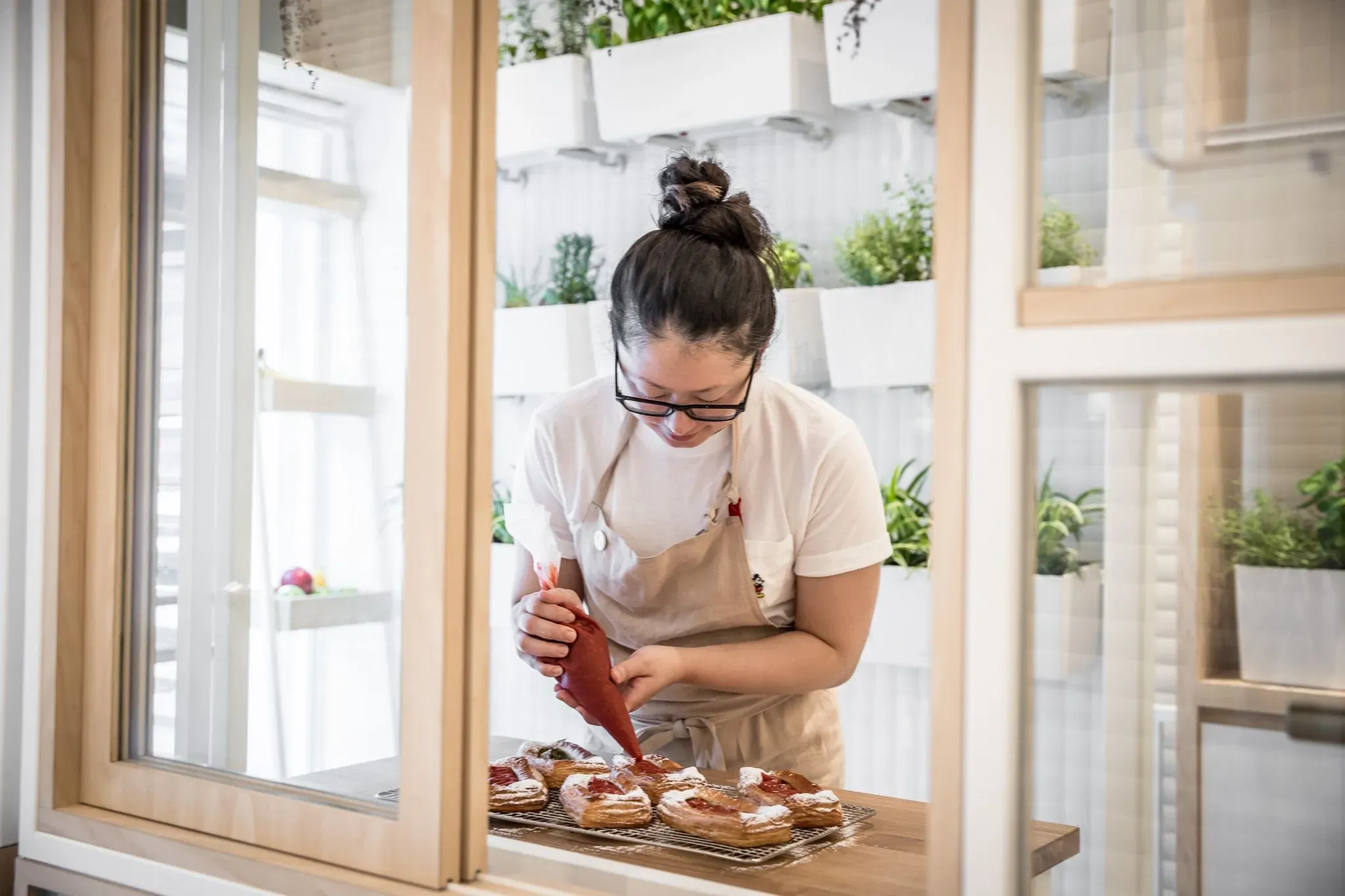
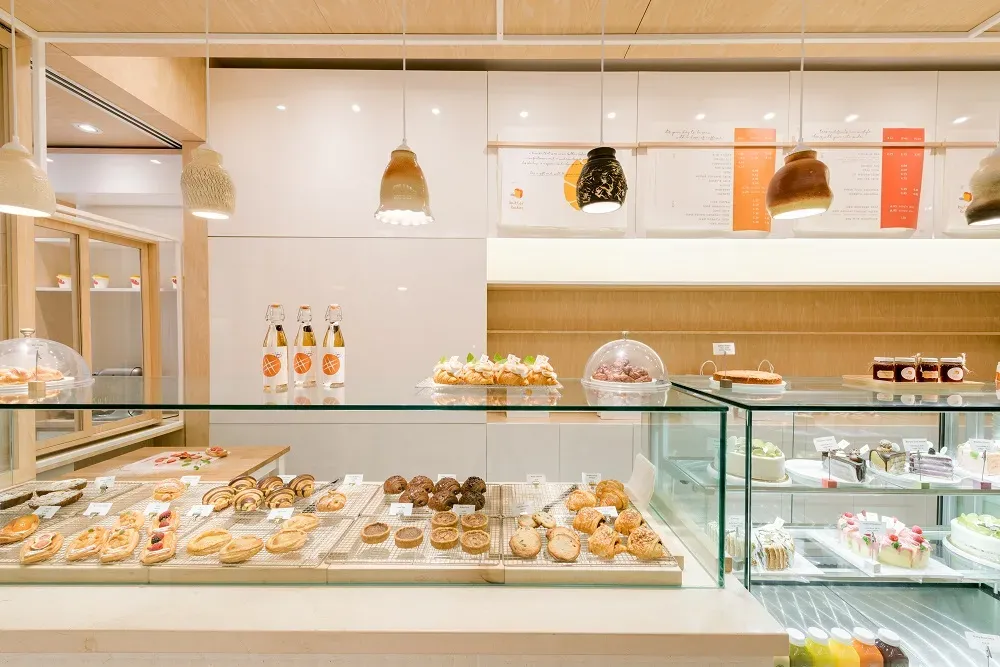
Initially, Butter Baker revolved around a steady stream of walk-in customers due to its central location right near Bay and Dundas in the heart of Toronto. From a kiwi jam-filled danish to a pork belly croissant sandwich, the goal was to provide delicious food that was made for hungry customers on the go.
Calvin’s tools at the time were equally straightforward.
“I was using Microsoft Excel to track almost everything,” Calvin admits. “But my wife worked at Shopify, so we were using their POS system a lot, too.” And those tools got the job done, which is what matters the most when you’re juggling that many roles at once.
But they had their quirks and inefficiencies, leading to a lot of troubleshooting and wasted time—time that could have been spent on customer service, staff training, or running Butter Baker’s multiple social media accounts.
After years of success, Butter Baker decided to expand their location to include a dedicated sit-down restaurant area, so their customers could soak up the vibes of a weekend brunch or an after-work meal. This expansion was finished in 2021, right as their business was changing in another major way.
“We opened the restaurant side in 2021 and had to pivot to take online orders,” Calvin says. “Once everything went online, our orders went from maybe 200 orders in-store to 200 orders online,” Calvin says. “So we saw a lot of deliveries, and everything shifted since then.”
It’s no small feat to redirect your entire business from a walk-in-centric model to one that almost entirely relies on no-contact pickups and delivery orders. Everything from the workers Calvin needed to assign to each shift to the style of marketing he pushed online needed to reflect the new way his customers were supporting Butter Baker.
The tools that had worked in 2017—Excel for daily reporting, Shopify for a POS, and even WhatsApp group texts for employee scheduling and communication—weren’t cutting it in 2021. They felt too disconnected, too inefficient. And if Calvin learned anything from his time at FedEx (and he did), it was the simple power of efficiency.
He needed a platform that would help unify all of Butter Baker’s needs without requiring him to learn a bunch of unfamiliar new tools from scratch—that was time he didn’t have. Luckily, Shopify was already able to integrate with a promising new platform: Homebase.
“I was using Microsoft Excel to track almost everything.”
— Calvin Su, owner of Butter Baker
The solution: A workflow that’s smoother than butter.
Butter Baker was now a multi-tiered restaurant with variables that Calvin needed to account for every day. The shift to online orders flipped his usual approach to staffing and scheduling on its head, but once the sit-down portion of the restaurant was able to take customers again, they’d be dealing with online orders and dine-in patrons at the same time.
As Calvin started searching for tools that would allow him to solve all those challenges in one place, he discovered Clover, a POS tool that’s built with restaurants in mind.
“We started playing around with Clover, and we found that it integrated with Homebase so much easier,” Calvin says. And through Clover, he discovered exactly what he’d been looking for in Homebase: Dedicated scheduling and team communication tools.
It was time to leave those Excel sheets and group chats behind, and lean into solutions that would help him stay organized and connected, while giving his workers the flexibility and transparency they need to fit part-time shift work into their lives.
“They use the Homebase app daily,” Calvin says. “They clock in, clock out, and then the managers use that data to run reports and build the next schedules. It makes everyone’s life much easier.”
And that data was easier to access than ever before. By moving away from the standard pile of spreadsheets and towards a unified platform, Calvin and his team were able to gather all their budgeting and scheduling data in one place and make more informed choices going forward.
Since Clover was integrated with Homebase, Calvin was able to see their exact daily sales data and generate a Sales Forecast to predict upcoming trends and plan accordingly with Tina. The same was true for scheduling overall: By tracking the exact hours logged by all workers each week, he was able to run a Weather Forecast to predict upcoming busy spots and make sure enough workers were on staff.
But even with all that data on hand, Butter Baker had another unique issue: The culinary creations cooked up by Tina and her chefs at the Central Kitchen regularly caused Butter Baker to go viral. At any given moment, they’re one TikTok away from having hundreds of local foodies arrive, eager to try their mango lassi soft serve sorbet.
“The summertime is particularly busy for us,” Calvin says. “We do a lot of ice cream. And TikTok makes it kind of unexpected; one person will post about us, and it’s like—boom. I know that certain flavors will be popular anyway, but all it takes is one or two TikTokers coming in for us to go viral again.”
For those moments of unexpected virality, the Schedule Builder allows Calvin to know the availability of his workforce—both his kitchen staff and his front-of-house teams—at a glance, and send requests for support immediately via the Homebase app.
“It’s really important that my managers can communicate with the team within the [Homebase] platform,” Calvin says. “If someone wants to change their shift, or we need to let them know a shift is changing? All that stuff is covered.”
Discussions and decisions that would have become entire group chat events can now be raised and resolved in minutes, allowing everyone to get back to serving the hungry Butter Baker fanbase.
Today, the transition to the new toolset is complete. Calvin has a suite of tools that allow him and his team to work smarter and communicate across both the downtown restaurant and the Central Kitchen HQ. But that just leaves the million-macaron question: If a new workflow is more efficient, does that also make it more cost-effective?
“They clock in, clock out, and then the managers use that data to run reports and build the next schedules. The Homebase app makes everyone’s life much easier.”
— Calvin Su, owner of Butter Baker
The result: Data-driven deliciousness.
When Butter Baker first made that big transition towards online orders, Calvin’s new set of tools didn’t just allow his team to adapt to the new situation—it also immediately improved the efficiency of his scheduling process.
“People would order via QR codes, which get sent straight to the kitchen, and the food just comes out ready for pickup,” Calvin says. “You don’t have people there taking orders; it’s all online.”
By using Scheduling Assistant and the other tools at his disposal, Calvin was able to consistently identify parts of the work week that needed more or less support from his staff. Those efficiencies started to add up fast.
“We save time, and we save labor costs,” Calvin says. “I’d say we saved about 20% of our labor budget because of how much more efficient [Homebase] made things.”
By building a shared ecosystem of tools, Calvin and his managers are giving themselves more data and more insight to build from in Homebase. They run reports every couple of weeks, identifying opportunities to tweak upcoming schedules or anticipate the needs of their customers.
While restaurants are famously unpredictable at the best of times, Calvin says that Homebase allows them to hit their labor cost targets around 80% of the time on the retail side of things, which is a huge change from the days of following hunches and using Excel spreadsheets.
The ability to find efficiencies and hit budget targets is even more important as Butter Baker continues to expand. Since 2021, their downtown location has added a retail storefront as well, selling kitchenware and other cozy goods. With two physical locations, a delivery/catering arm, a cafe, a sit-down restaurant, and a retail shop to manage, Calvin has a lot of variables to keep track of.
And by managing all of that via Homebase, none of his data is being left behind. Everything is considered and analyzed for reporting and forecasting, and nothing is left to chance. Because DIY doesn’t need to be a struggle; it just needs to make sense.
Having tools that work as intended, that are accessible when you need them, and that help you make data-backed decisions for your team isn’t just an aspirational goal: It’s the one lesson Calvin wants to pass on to any aspiring entrepreneurs who want to follow Butter Baker’s example.
“We save time, and we save labor costs. I’d say we saved about 20% of our labor budget because of how much more efficient it made things.”
— Calvin Su, owner of Butter Baker
Enjoying the sweet life.
It all started with those macarons, and a pair of siblings choosing to make some major career pivots and chase their passions while playing to their strengths. But the true theme of Tina and Calvin’s journey from Butter Avenue to Butter Baker (and beyond) is one of planning and patience. Built on the rock-solid foundation of family, the two of them have worked to ensure every step forward was as efficient and effective as possible.
Sometimes, those steps looked like Calvin becoming the business ops manager/marketing director/scheduling manager/tech champion for a bustling cafe in the heart of North America’s fourth-largest city.
But each step could also become a pivot—a move away from old tools that added more work to his day, or towards a new workflow that allowed them to meet a huge shift in their customer behavior head-on. Looking back, it’s that first shift that Calvin hopes other business owners can learn from.
“When we first opened Butter Baker, the tools I was using weren’t 100% integrating with our other apps and machines,” Calvin recalls. “But once you’ve split your system across separate machines, you’re just creating more work for yourself.”
By reducing that workload on himself, Calvin also reduced the friction and inefficiency for the rest of his team. Now, things run smoothly. His team communicates and receives shift information via the Homebase app. The daily activity of Butter Baker is all logged and processed into reports and forecasts for his team to learn from and plan around.
Everyone works normal hours; no one is trying to create a Canadian version of The Bear. Across both locations, Butter Baker has found the sweet spot between work and life for its owners and its workers. “Efficiency really helps us to run Butter Baker,” Calvin says.
And according to Calvin, it all starts with building a foundation that makes things as easy and accessible as you need them to be.
“If you’re starting out, find something that can integrate everything,” Calvin says.
Consider it food for thought.
“Efficiency really helps us to run Butter Baker.”
— Calvin Su, owner of Butter Baker
