Shift Swapping Software
Restore order to shift trading.
Take finding shift coverage off your plate. Let your team self-manage shift swaps and trades, and just approve when ready.
Restaurant Scheduling Best Results, Summer 2026

Best Employee Scheduling Software, 2026

Best Employee Scheduling Software, 2026


Team-managed and manager-approved shift trades.

Last-minute covers, covered.
Post open shifts for eligible employees to claim right from the app to fill coverage gaps.

Compliance and budgets, managed.
See any conflicts with your labor budget and compliance policies before approving shift swaps.

Employee-run, manager-approved.
Employees can coordinate shift trades and swaps while managers stay in full control.
Keep your shifts staffed with team-managed swaps.

Sign up in 5 minutes
Shift trading software
Never let a shift trade fall through the cracks.
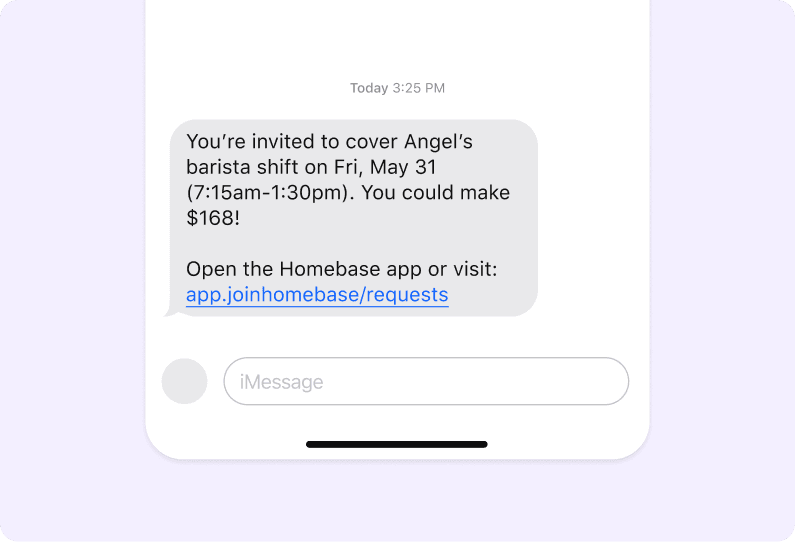
- Post open shifts showing potential earnings so eligible employees can claim them in the app to quickly cover staffing gaps.
- Employees can coordinate their own covers or swaps before sending requests for manager approval.
- Automatically update the schedule for the whole team with approved shift changes, so the right employees show up for the right shifts and get paid accurately.
Shift swap app
Keep shift swaps on budget and compliant.
- Employees can only request swaps from coworkers with compatible skills, roles, wage rates, and availability to keep schedules conflict-free and compliant.
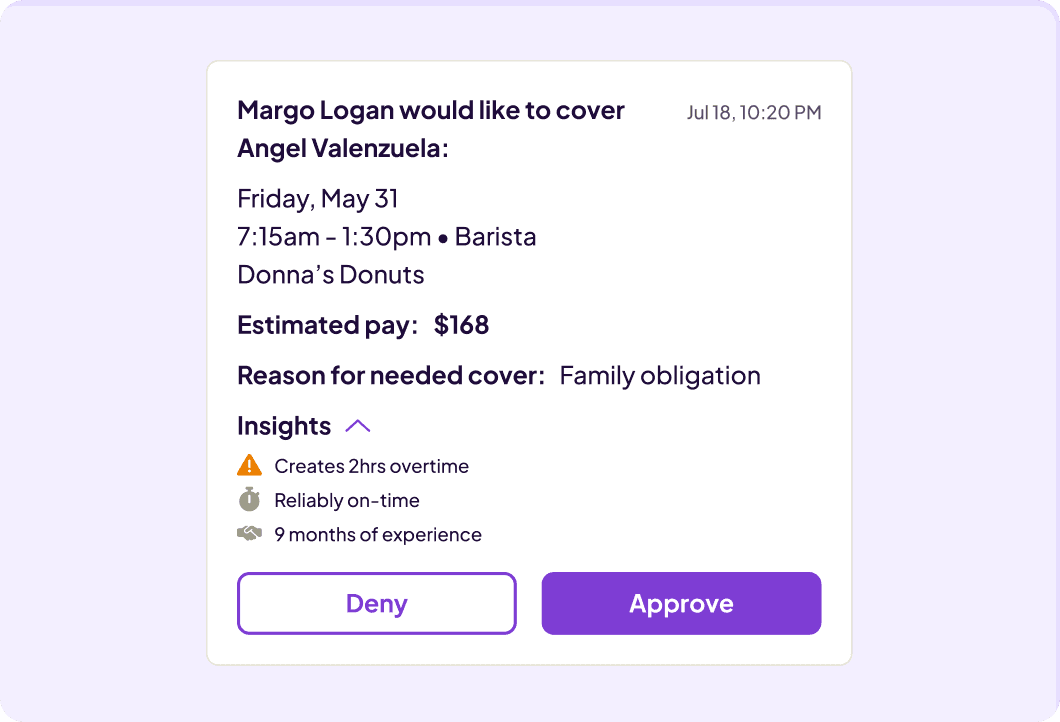
- Managers can see overtime flags and estimated pay in shift swap requests before approving to control labor costs in real-time.
- Managers can view a history of all shift changes if questions or disputes come up.
Shift swapping schedule
Track shift swaps from request to schedule to payroll.
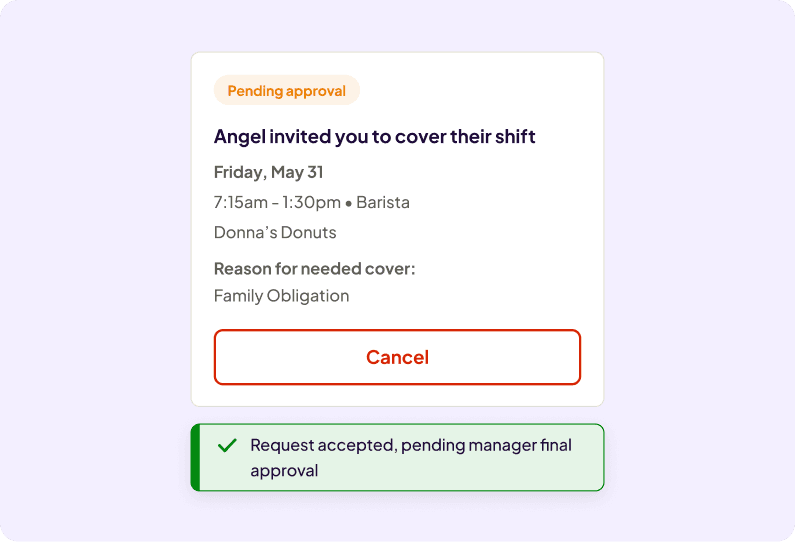
- Employees are notified when a team member agrees to swap shifts and when managers approve the request.
- Schedules update automatically with approved shift changes, including any impacts on labor costs.
- Updated shifts and pay feed into payroll, so everyone gets paid accurately.
"Wow, we do love Homebase for scheduling, messages and shift exchanges. Really happy to have found your product. Very user friendly and easy to navigate."
Chehalem Aquatic & Fitness Center
Tara Franks, Coordinator
Top-rated app built for small business teams.
Best Payroll for Hourly Teams
2024

Best in Business for Best AI Implementation
2025

Best Employee Scheduling
2025

Best HR & Employee App
2025

FAQ
Shift swapping, explained.
The everything app for hourly teams.
Spend less time wrangling logins and transferring data. Homebase comes with everything else you need to manage your team.