Hospitality Payroll Software
Events and shifts, one payroll.
Schedule catering events, track banquet captain hours, and calculate overtime in one app.
Best Small Business Payroll 2025

Best Payroll Services 2025

Best Payroll for Small Business 2026

Best Small Business Payroll 2025
Best Payroll Services 2025
Best Payroll for Small Business 2026
Made for hourly teams
Payroll without the back office nightmare.
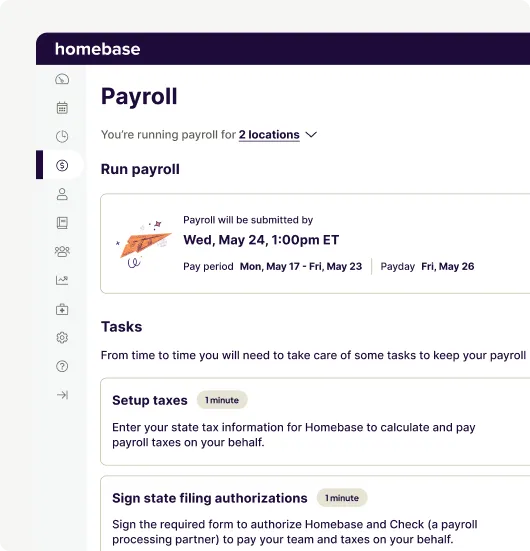
Schedule shifts, track hours, import tips, and run payroll—all in one system. No switching apps between front desk and back office.
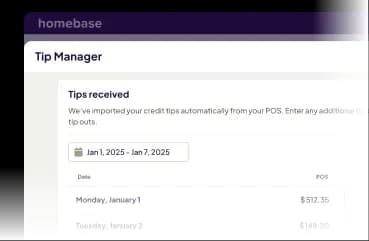
Import Saturday night tips, distribute them by Sunday.
Pull gratuities straight from your POS, calculate shares by hours worked, add to paychecks—done seamlessly.
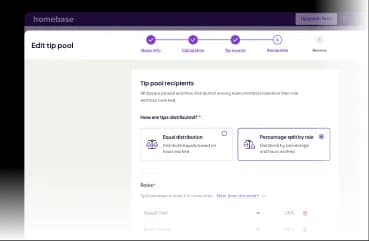
Track off-site catering hours, pay event staff—same system.
Schedule wedding at one rate, brunch service at another—hours flow to payroll automatically with location verification.
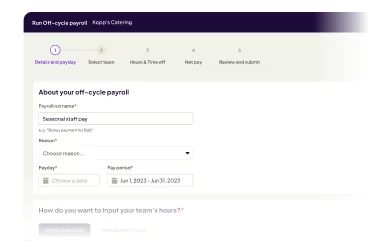
Pay event staff separately without payroll fees.
Run weekend event payroll, then weekly staff payroll—unlimited runs included at one flat monthly cost.

run your team and Payroll in one App
Sign up in 5 minutes.
Seasonal Hospitality Payroll
Handle seasonal surges and staff without chaos.
Homebase adapts to hospitality's reality with unlimited payroll runs, contractor payments, and wage access—all at one flat rate.
- Run unlimited payrolls for one flat rate—pay weekend banquet servers weekly, hotel staff bi-weekly, and wedding bonuses without extra fees.
- Pay housekeeping, front desk, and contracted event coordinators in one system with automatic W-2s and 1099s generated at year-end.
- Give servers, bartenders, and venue staff earned wage access between paychecks—helping you compete for talent at no cost.
Multi-Location Restaurants
Track venue work without chasing down timesheets.
Geolocation tracking confirms when staff arrive at weddings, off-site events, or secondary properties—no more guessing if they were actually there.
- Track time automatically when teams work catering gigs or multi-venue events, with location verification eliminating manual clock-in disputes.
- Set up multiple pay rates per employee for overnight shifts, weekend banquets, or holiday premiums—Homebase applies the right rate based on which role they work.
- Process uniform reimbursements, travel expenses, and equipment costs directly through payroll so everything stays documented in one system.

Run hospitality payroll in four simple steps.
Schedule your event staff, track hours across venues and off-site locations, and process payroll—all in one system so your events and operations run smoothly.
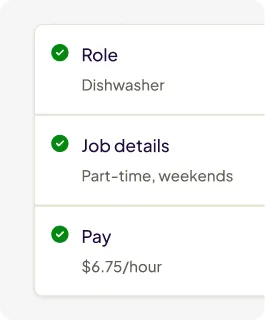
1. Hire
Post jobs, track applicants, and onboard new hires.
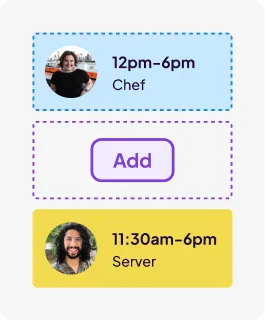
2. Schedule
Add your team. Build instant, automated schedules.
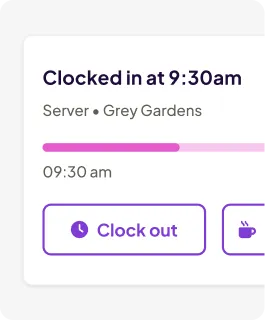
3. Track
Shifts sync to time clocks to keep your team on track.
4. Pay
View hours and wages. Run payroll quickly and accurately.
A real impact on real teams.
behind every number is a happier team.
150k+
Small businesses that ❤️ Homebase.
2m+
Hourly workers conquering their shifts.
3b+
Hours tracked (and counting)
FROM TIP POOLS TO PAYCHECKS, DONE
What other products can power your event's success?

Tip Manager
See how your hourly teams get their tips distributed fairly and automatically, every shift.
Learn more
Employee Scheduling
Discover how to build schedules faster and let your team manage their own shift swaps.
Learn more
AI Assistant
Meet your AI assistant that answers payroll questions, flags errors, and saves you hours.
Learn moreWe play well with others.
Sync your POS with Homebase to optimize your schedule based on your sales.