Small Business Resources: 13 Picks for June 2026


SMALL BUSINESS INTEL, IN YOUR INBOX
Table of contents
What did business owners have to say about the day-to-day realities of running a business this month?
Across Reddit, podcasts, YouTube, and small business news, many of the conversations focused on what happens after the launch phase. Small business owners shared honest discussions about profitability, workload, hiring, and building a business that doesn't depend entirely on them.
Other conversations revolved around practical challenges that affect many growing businesses, including shipping costs, supplier relationships, funding opportunities, and workforce development.
If you're looking for small business resources, advice from other business owners, and insights into the challenges of running a small business in 2026, this month's roundup brings together some of the most useful discussions and lessons shared this month.
TL;DR: Learn From Other Small Business Owners
- Before chasing more sales, review your costs. Several owners said small changes to pricing and expenses made a noticeable difference to what they actually took home each month.
- Write down how you do one recurring task this week. Small systems can make it much easier to delegate work later on.
- If your business is online, go through your checkout process as if you were a customer. Unexpected shipping costs are still catching people out.
- Stay close to your suppliers. Many owners said strong supplier relationships have saved them time, money, and stress.
- Don't rush past mistakes. Some of the most experienced entrepreneurs in this month's discussions said their biggest improvements came from figuring out what went wrong and making a small change next time.
Small Business Resources to Bookmark
These links cover standard labor laws business owners need to know, how to start your business, and funding opportunities to keep you growing.
- State Labor Laws Hub: State-by-state wage and workplace rules.
- How to Start a Small Business: A practical guide to getting set up.
- How to Register a Business: What you need to file and where to do it.
- Small Business Insurance Cost: What coverage typically costs and what affects the price.
- Small Business Grants Guide: Where to look for funding and how to apply.
What Small Business Owners are Talking About in Reddit Threads and Forums
Here's a sample of conversations happening in small business forums like Reddit, where business owners are sharing their honest thoughts about running a business.
Has anyone else realized that starting a business... - r/smallbusiness
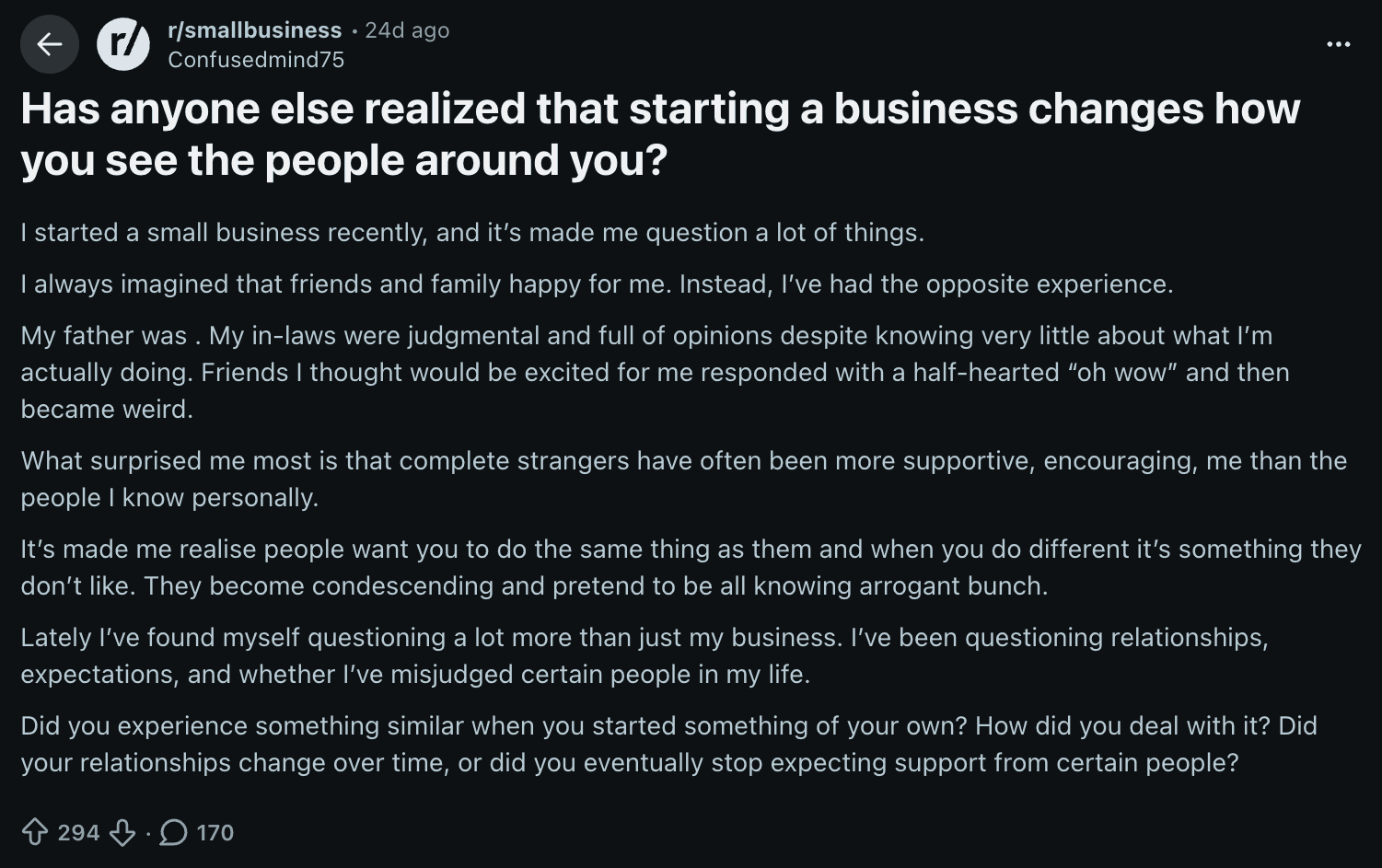
One owner shared that starting a business changed some of their relationships in ways they hadn't expected. Friends who used to be supportive became skeptical, while others suddenly expected free advice, discounts, or help.
The discussion quickly turned into a wider conversation about how difficult it can be to explain the pressure and uncertainty of running a business to people who haven't done it themselves.
Community takeaway: Several business owners said finding even one or two peers who understand the realities of running a business was more valuable than constantly looking for advice online. Having people you can speak honestly with can make difficult periods easier to navigate.
Be honest. How much money did you actually make? - r/smallbusiness
This thread asked a simple question: after all the bills are paid, how much money are you actually left with?
The answers varied dramatically. Some owners running six-figure businesses admitted they were taking home less than people expected once software, payroll, inventory, rent, taxes, and loan repayments were factored in. Others shared how much their profitability improved after reviewing expenses or raising prices.
Community takeaway: What came up repeatedly was that reviewing costs often had a faster impact on profitability than finding new customers. If you've not looked closely at your expenses recently, it may be worth starting there.
Another Year, Another Update: Serial Entrepreneur Edition - r/Entrepreneur
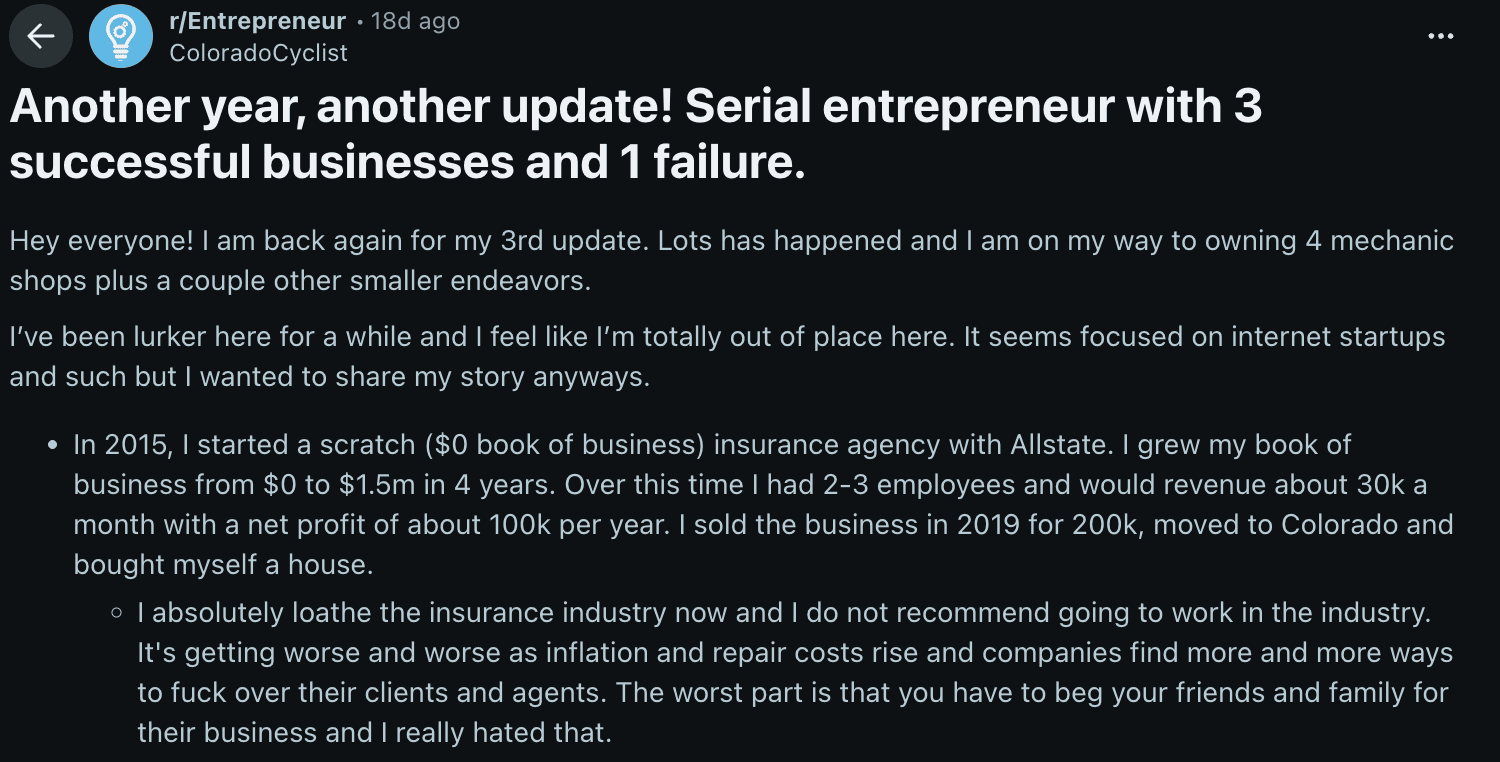
A serial entrepreneur shared their latest annual business update, including lessons from businesses that succeeded and others that didn't.
One of the more interesting themes was how often early mistakes ended up improving later businesses. Poor hiring decisions led to better recruitment processes. Difficult customers led to clearer contracts. Underpricing led to greater confidence in charging what the work was worth.
Community takeaway: One mistake does not define your business. Your biggest improvements can come from reviewing what went wrong and putting a better process in place next time.
I feel like I bought myself a job, not a business - r/smallbusiness
The original poster explained that although they owned a business, every decision, task, and problem still landed on their desk.
Many commenters admitted they felt exactly the same way. Some had reached a point where taking a week off felt impossible because nobody else knew how key parts of the business worked.
Community takeaway: Start documenting tasks before you think you need to. Even simple process notes can make delegation easier later and reduce how much sits solely in your head.
People are asking where did I source my supplies? - r/smallbusiness
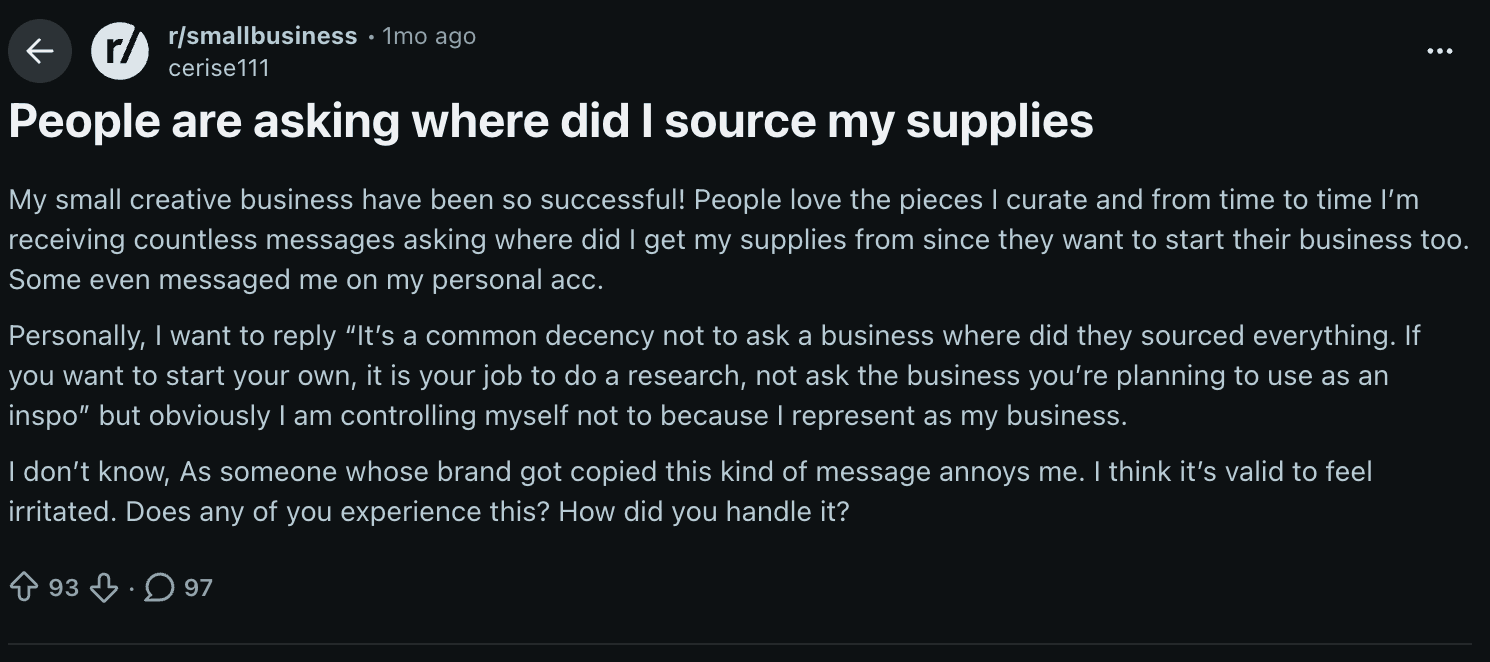
This conversation started with a common question: what do you say when people ask where you buy your products or materials?
For some owners, supplier relationships had taken years to build. Others were happy to share general information but kept specific contacts private because sourcing had become part of their competitive advantage.
Community takeaway: Think ahead on what parts of your business you're comfortable sharing. Having a clear answer can save awkward conversations later and helps you communicate those boundaries consistently.
Is unexpected shipping cost the main reason customers abandon checkout? - r/smallbusiness
This discussion focused on what happens when customers get to checkout and discover shipping costs that are higher than expected.
Several business owners shared examples of customers abandoning purchases after reaching the final payment page, particularly when shipping fees weren't visible earlier in the buying process.
Community takeaway: Transparency can make a difference. Owners saw better results when shipping costs were shown earlier, free-shipping thresholds were clearly explained, or delivery fees were built into product pricing.
Business owners, what do people coming from employment not understand about owning a business? - r/smallbusiness
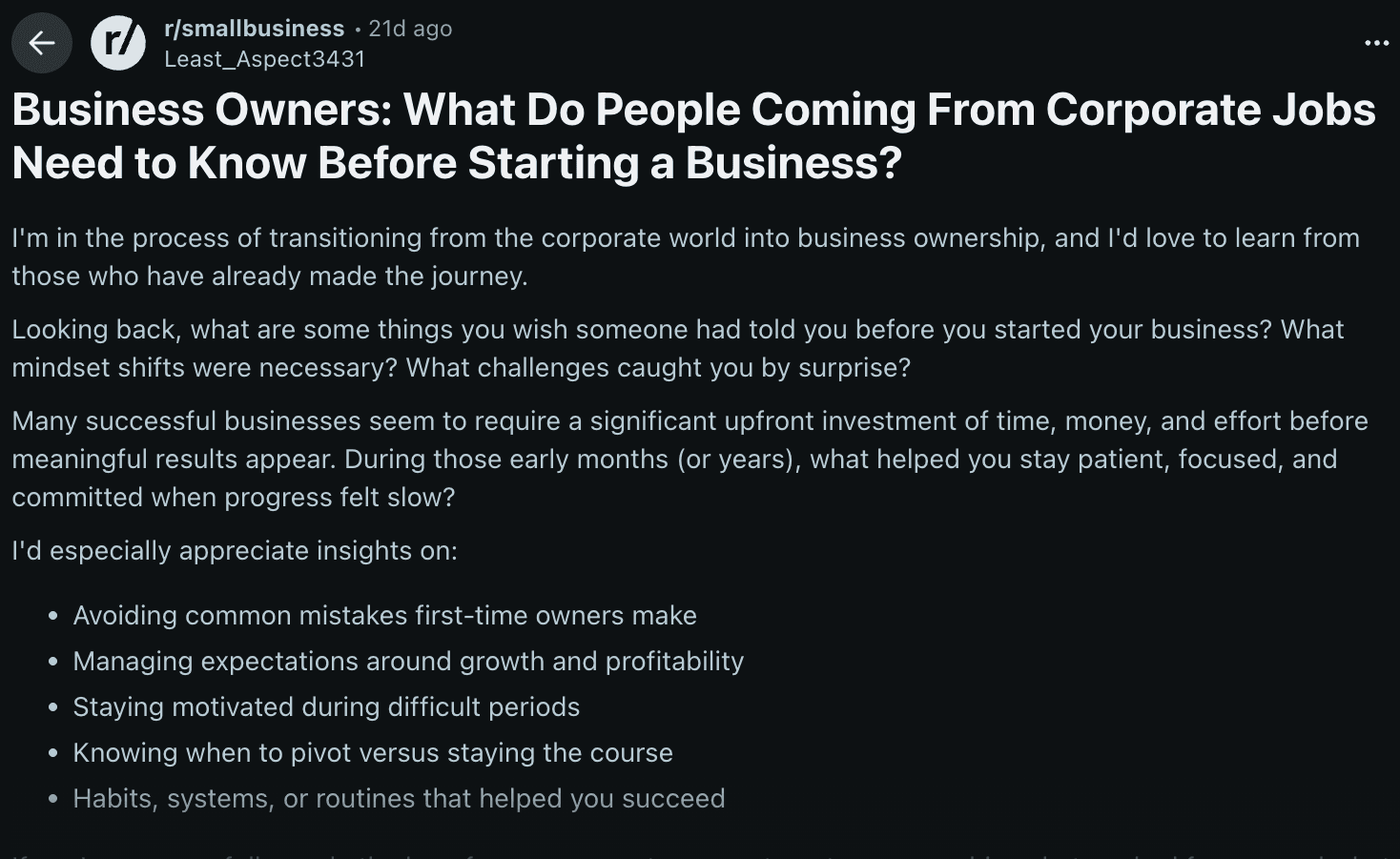
Business owners reflected on what they wish someone had told them before they started.
Many were surprised by how much time was spent on administration, bookkeeping, hiring, supplier management, customer service, and compliance. The actual work they started the business to do often became a smaller part of their week than expected.
Community takeaway: Try and spend more time learning the basics of finances, operations, and customer management before launching. Understanding those areas early can save a lot of frustration later.
Small Business Podcasts and YouTube Creators to Watch this Month.
Looking for fresh small business ideas, marketing advice, or growth lessons? We've rounded up the podcasts, videos, and discussions that caught our attention this month, along with the key takeaways business owners are putting into practice.
The Real Costs of Building a Boring Business
This episode looks at a side of entrepreneurship that rarely gets attention online. Rather than focusing on rapid growth or big exits, it explores what it actually takes to build a stable, profitable business over time.
The discussion covers the trade-offs that come with long-term business ownership, including slower growth, operational complexity, and the discipline required to keep improving something year after year.
Takeaway: Consistency is key. Small improvements to pricing, processes, and customer retention often have a bigger impact over time than chasing the next growth opportunity.
How I'd Start a Business in 2026
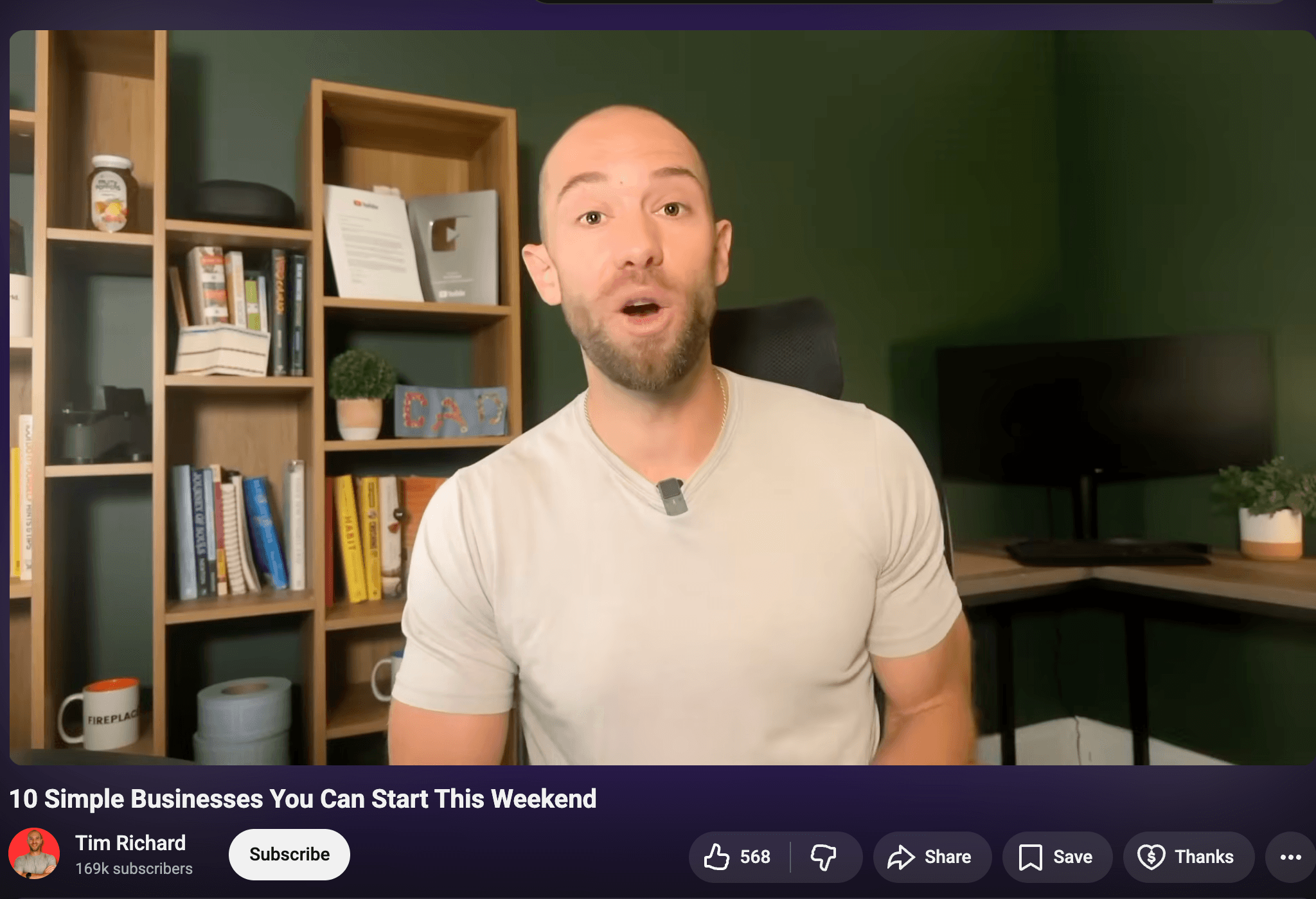
This video breaks down how the creator would approach starting from scratch in today's business environment.
Rather than focusing on logos, websites, or business plans, the advice centres around speaking to potential customers early, understanding real problems, and testing demand before investing significant time or money.
Takeaway: Validate demand before building solutions. Several business owners in this month's Reddit discussions echoed the same point: customer conversations will reveal more than weeks of planning.
The Reality of Running a Small Business Right Now
This video shares lessons from building and growing a small business, including product selection, pricing, sales, and managing day-to-day operations.
A recurring theme is how easy it can be to overcomplicate things early on. The creator discusses the value of starting with a smaller product range, paying attention to customer behaviour, and making decisions based on what is actually working.
Takeaway: Growth becomes easier when you understand what customers already want. Starting with fewer products or services can make it easier to identify what's driving sales before expanding further.
Small Business Resources and News to Read in June 2026.
Small business news moves fast. Here's what made headlines this month and what it actually means for how you run your business.
Small-business grants you can apply for in June 2026
June brought another wave of grant opportunities for small businesses, covering everything from workforce development and manufacturing to local business growth. One of the larger opportunities came from the SBA, which announced up to $50 million in grant funding to support organisations that provide training and technical assistance to manufacturers. Individual awards can reach up to $5 million.
Takeaway: Most grant applications take longer than people expect. Keep a running folder with key documents, financial information, and business summaries so you're not starting from scratch every time an opportunity appears.
White House policies hitting small business contractors hard, Senator says
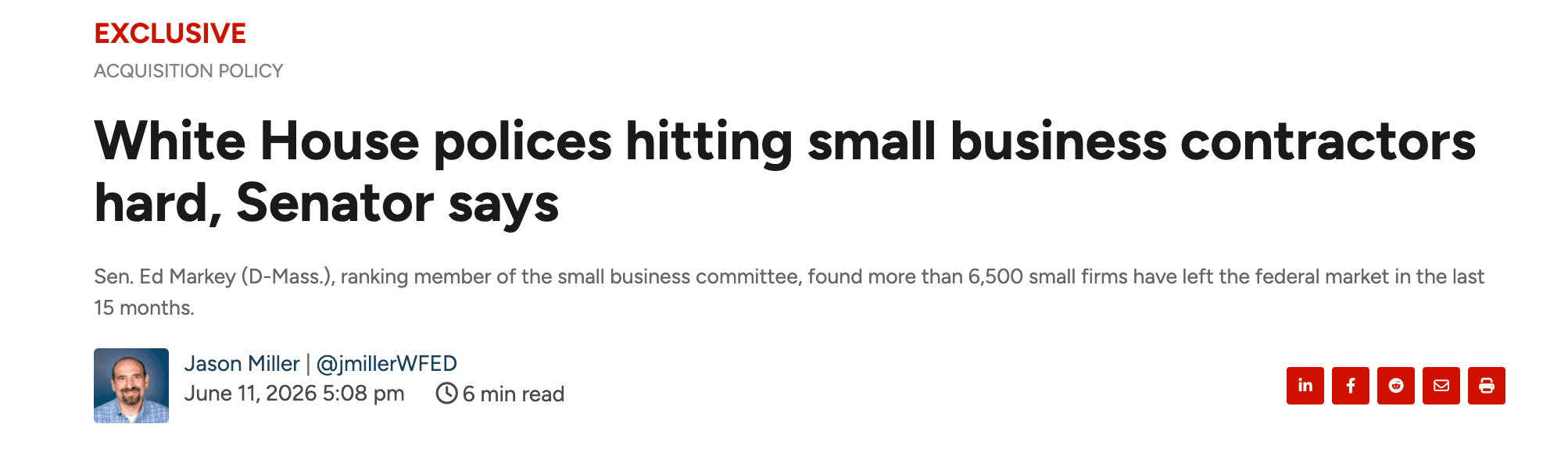
Government contracting became a major talking point this month after new figures suggested more than 6,500 small businesses have left the federal marketplace since early 2025. The report also found a significant decline in federal spending with small business contractors over the same period.
For smaller businesses that rely on government work, the discussion highlighted how quickly policy changes can affect revenue, procurement timelines, and future planning.
Takeaway: If a large percentage of your revenue comes from one client, contract, or sector, it may be worth reviewing how exposed the business is to external changes. It’s important to build multiple revenue streams where you can.
America's Workforce Academy: The Future Is for Everyone
Meta announced a new workforce development initiative aimed at addressing growing demand for skilled workers. The programme will provide free training, industry-recognised certifications, and guaranteed job opportunities for participants in selected locations. Meta has committed $115 million to the initiative and expects to train thousands of workers as demand for AI-related infrastructure continues to grow.
While the programme itself is aimed at workers rather than business owners, it reflects a wider trend appearing across many industries: companies are investing more heavily in skills development because finding qualified talent is becoming increasingly difficult.
Takeaway: Hiring challenges are rarely solved by recruitment alone. Training, upskilling, and creating clearer career pathways are becoming increasingly important for attracting and retaining good people.
What's Next for Small Business Owners in 2026.
This month's conversations suggest many business owners are becoming more selective about where they spend their time, money, and energy.
Rather than chasing every opportunity, owners are focusing on the basics: understanding profitability, improving processes, building stronger customer relationships, and making their businesses easier to run.
Heading into July, the businesses making the most progress seem to be the ones paying attention to what works, cutting what doesn't, and making small improvements consistently over time.
We publish this roundup every month because the best small business resources usually come from people doing the work every day.