From registering your business to hiring your first team, this free checklist covers every step in order. Built for first-time small business owners.
starting a small business checklist

What's inside the checklist?
From choosing a business structure to opening day, this checklist walks you through every step. Free to download, easy to print, and built for owners doing this for the first time.

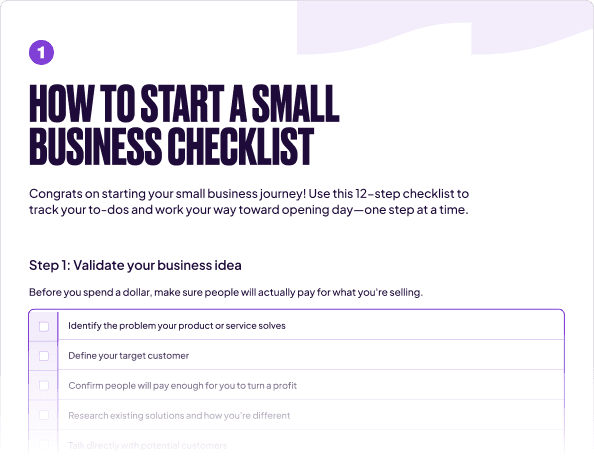
Legal and financial setup.
Business structure, EIN, licenses, permits, business bank account, and insurance. Get the legal foundation right before anything else.
Brand, location, and marketing.
Your brand identity, website, Google Business Profile, and the two or three marketing channels where your customers spend time.
Hiring and team setup.
Job descriptions, onboarding paperwork, direct deposit, scheduling, time tracking. Everything you need to build and run your first team.

Did you know?
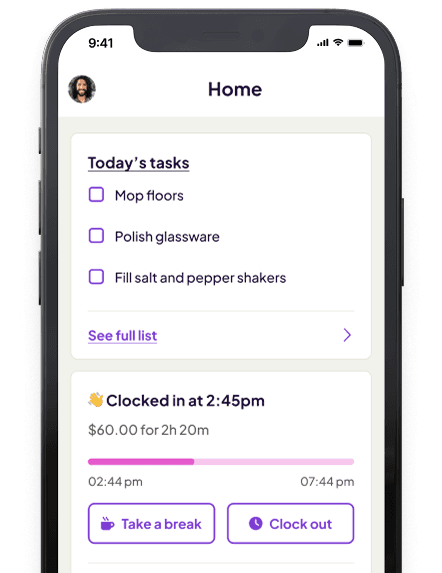
When it's time to hire, Homebase handles the hardest part. From posting jobs to running your first payroll, it's all in one app.
Post jobs to top boards — Indeed, ZipRecruiter, and Glassdoor — all at once.
Onboard new hires before day one, with W-4s, I-9s, and direct deposit all set up.
Build and publish your first schedule in minutes.

Small business intel, in
your inbox
Table of contents
Opening a small business means making a lot of decisions, many of them for the first time. Get them in the wrong order and you'll redo work. Miss one and you could face a problem on opening day that was a simple fix two weeks earlier.
This starting a small business checklist puts everything in sequence. Twelve steps, from validating your idea to setting up your first team, so you can track where you are and know what comes next.
It's built for first-time owners who plan to hire hourly workers at a physical location: restaurants, retail shops, salons, fitness studios, and similar businesses. If that's you, every step in this checklist applies.
How to Use This Checklist
Each step builds on the one before it. That's intentional.
You'll need a registered business name before you can open a business bank account. You'll need an EIN from the IRS before you can set up payroll. You'll need a bank account before you can process payments or pay your first employee. Work through the steps in order and most of those dependencies sort themselves out.
Use this as your running to-do list from now until opening day. Print it, save it, or work through it one step at a time. Each step has a clear list of tasks so you always know exactly what to do next.
Why Getting Your Business Structure Right Early Matters
Your business structure (sole proprietorship, LLC, partnership, or corporation) affects your personal liability, how you file taxes, and whether investors can put money into your business. It's one of the first decisions in this checklist because almost every step after it depends on it.
A sole proprietorship is the simplest to set up, but it doesn't separate your personal assets from your business debts. An LLC is a popular choice for first-time small business owners because it limits personal liability without the complexity of a full corporation.
If you're not sure which structure fits your situation, a business attorney or accountant can help you decide before you file anything.
The Steps Most First-Time Owners Get Stuck On
A few steps in this checklist stop people cold. They're not complicated, but they have real consequences if you skip them or do them out of order.
- Choosing a business structure. Your structure (sole proprietorship, LLC, partnership, or corporation) affects your personal liability, how you file taxes, and whether outside investors can put money into your business. Most first-time owners at a physical location choose an LLC because it limits personal liability without the complexity of a full corporation. Step 4 walks you through the trade-offs for each option.
- Getting your EIN. An Employer Identification Number is essentially a Social Security number for your business. You need it to open a business bank account, hire employees, and run payroll. You can apply directly on the IRS website in minutes, at no cost.
- Sorting out licenses and permits. Requirements vary by industry, city, and state, which makes this step feel harder than it is. A restaurant needs a food service permit and a health inspection. A retail shop typically needs a seller's permit to collect sales tax. Step 5 covers what to check at the federal, state, and local level so nothing catches you off guard before opening day.
What to Expect When You Start Hiring
For most brick-and-mortar businesses, the most complex part of the checklist is also the most important: hiring and setting up your team.
Steps 11 and 12 cover everything from writing your first job descriptions to getting your scheduling and payroll tools in place. Here's what you'll need before your first hire:
- A registered EIN (required for payroll and tax purposes)
- A business bank account set up for direct deposit
- Workers' compensation insurance (required in most states once you hire)
- Clear job descriptions with hours and pay ranges
For onboarding, you'll need federal and state tax forms (W-4, I-9, and any state withholding forms), direct deposit authorization, and an onboarding plan for the first week.
Once you've brought on your first team members, you'll also need a scheduling app to manage shifts and a time tracking app to record hours accurately. Those two things together are your payroll foundation.
Homebase brings all of it into one free app. You can post jobs, collect onboarding paperwork digitally, build your first schedule, track hours, and run payroll without switching between tools.
FAQs About Starting A Small Business
What do I need to start a small business?
At a minimum: a registered business name, a business structure, an EIN, a business bank account, and any required licenses and permits for your industry and location. This checklist walks you through each one in the right order.
Do I need an LLC to start a small business?
You don't need one, but it's worth understanding the difference. A sole proprietorship is simpler to set up but doesn't protect your personal assets if the business takes on debt or gets sued. An LLC creates a legal separation between you and the business, limiting your personal liability. Most first-time owners with a physical location and hourly employees choose an LLC for that protection. Step 4 of this checklist walks you through all your options.
Do I need a business license to start a small business?
Most businesses need at least one license or permit, but the specific requirements depend on your industry, city, and state. A restaurant needs a food service permit and a health inspection. A retail shop typically needs a seller's permit to collect sales tax. Step 5 of this checklist covers what to check at the federal, state, and local level. Homebase's free Business License Assistant can also help you find exactly what applies to your business type and location.
How much does it cost to start a small business?
It depends on your industry, location, and business type. A food business typically has higher startup costs than a service business. A retail shop in a high-rent area costs more than one in a suburban strip mall.
Step 7 of this checklist walks you through building a full cost estimate: one-time startup costs, recurring monthly expenses, owner salary, payroll, and a buffer for the unexpected. The SBA also offers loan programs designed for first-time small business owners.
How long does it take to start a small business?
Most first-time owners take three to six months from initial planning to opening day. The timeline depends on your location (permit and license timelines vary by city and state), your industry, and how much of the work you're handling yourself. Use this checklist to plan your critical path and avoid last-minute surprises.
Take your First Steps to Starting Your Small Business
This checklist covers every major requirement between idea and opening day. Work through it in order and you'll know exactly what's done, what's next, and what's blocking you.
The steps build on each other, so sequence matters. Get your business structure registered before you open a bank account. Get your EIN before you set up payroll. Get your permits sorted before you open the doors.
When you reach steps 11 and 12, Homebase is free to start. Post jobs, onboard your team, build your schedule, and run payroll all in one app.
Related Templates
Check out moreSmall Business Tax Deductions
Starting a Small Business Checklist
Weekly Employee Schedule Template
Shift Report
Attendance Policy
Pay Stub Template

Manage your team better today.
Managers save 5+ hours a week with Homebase